
MERV Rated Air Filters: What Are They Doing to Your Equipment?
Introduction:
There is a current trend where people are changing “fiberglass” air filters in cooling and heating equipment to air filters with a higher “MERV” rating to improve indoor air quality and reduce airborne particles. While higher-rated filters can improve filtration, end users should use caution in selecting air filters for their equipment.
MERV Rating:
- Minimum efficiency reporting value – it is a measure of the air filter effectiveness.
- Air filters with a higher MERV number will trap smaller particles.
- Air filters with a higher MERV rating require equipment with a higher static pressure rating (how much air equipment can move when facing airflow resistance).
- Air filters are used to protect both the equipment and the people.
- It may be necessary to replace existing equipment if a higher level of air quality or cleanliness is desired.
- High quality air filter manufacturers can provide air filters with low air resistance. These filters will have a higher purchase price.
Using Air Filters with High MERV Ratings is Becoming More Popular:
- Issues can occur when using air filters with high MERV ratings.
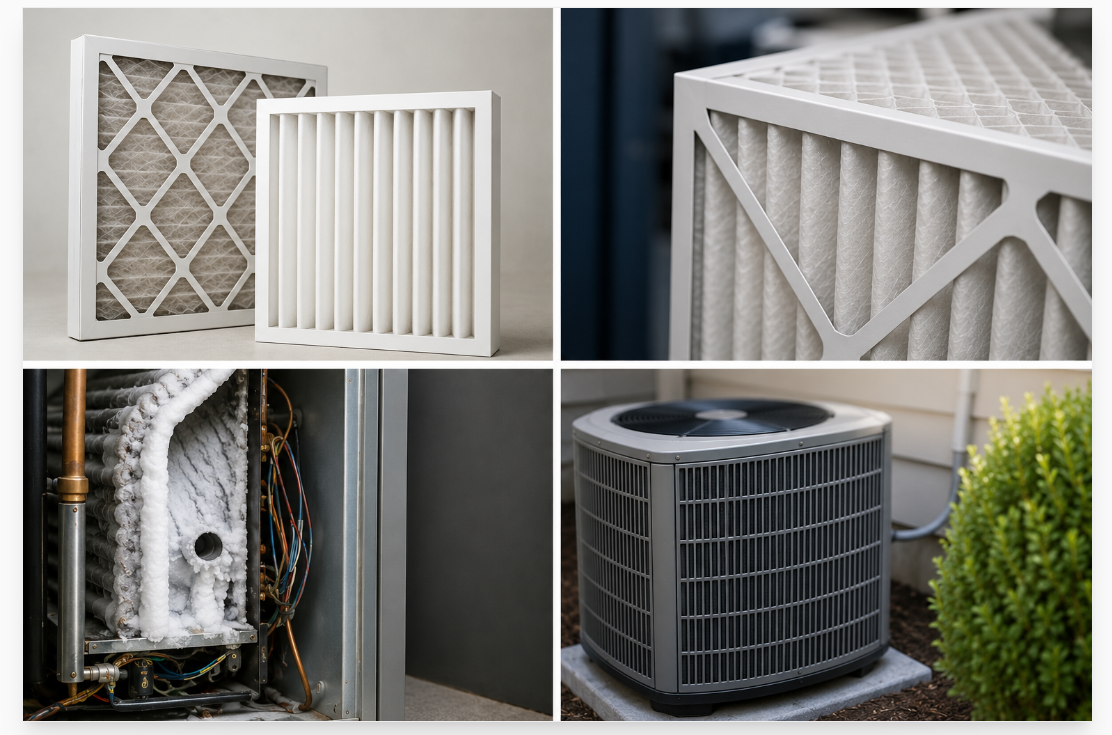
- Airflow may be restricted enough to lead to frozen cooling coils, extra strain on fan motors, and systems that are unable to deliver air adequately cool areas served.
- Furnaces that are used with outdoor air conditioner condensing units have limited “static pressure” ratings. This is the ability to move air when there is resistance to airflow (air duct, grilles, cooling coils, and air filters).
- Some furnace systems only have enough static pressure available to use fiberglass filters (when all of the other system airflow restrictions are accounted for).
- Air filters that are too effective in removing particles will “fill up” faster which will cause even more resistance to airflow. This will lead to the issues previously listed.
Best Practices:
- Follow manufacturer recommendations for filter ratings.
- Replace filters regularly to avoid excessive airflow restriction.
- Consult an HVAC professional before increasing filter efficiency.
Conclusion:
We recommend using caution when switching to air filters with a higher MERV rating. Professionals in the HVAC industry can evaluate equipment capabilities and make air filter recommendations. Only use air filters with MERV ratings that your equipment is rated for and capable of proper operation while using them. Check out our services page to learn more about how our team approaches HVAC design, ventilation, and mechanical engineering services for commercial and residential projects.